
Metabolic Syndrome (MetS)
A clustering of metabolic risk factors—amplifying cardiometabolic risk.
WHAT IS METABOLIC SYNDROME
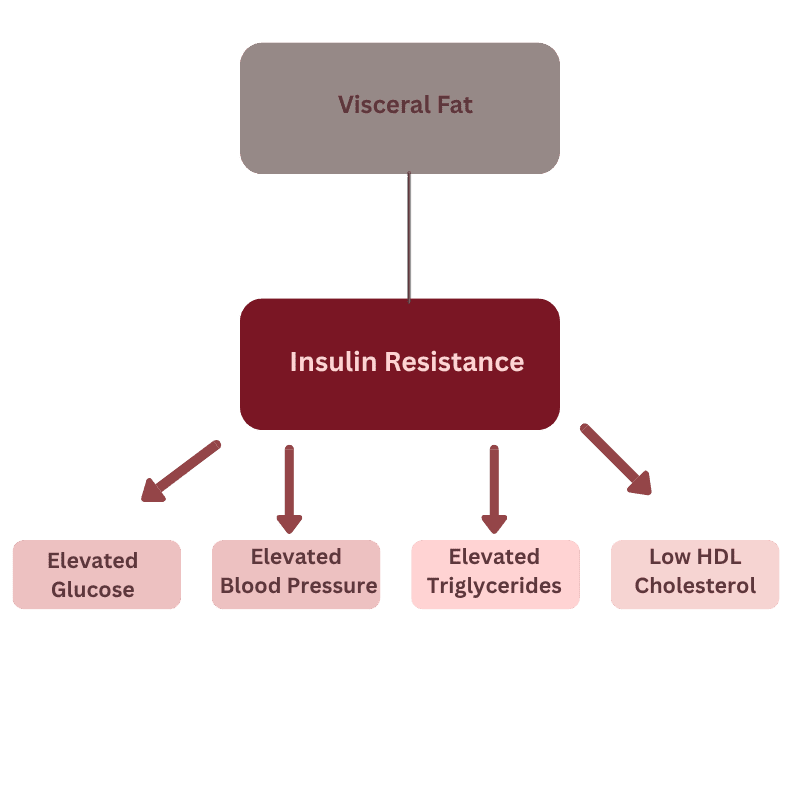
Metabolic syndrome is defined by the co-existence of:
- Central adiposity (excess abdominal fat)
- Elevated blood sugar or insulin resistance
- Elevated blood pressure
- Atherogenic lipid abnormalities (unhealthy cholesterol patterns)
Their clustering reflects a shared underlying process—most notably insulin resistance and visceral adiposity.
Diagnostic Criteria
Defined by established clinical thresholds across key metabolic parameters.
Presence of three or more of the following:
- Waist circumference
≥102 cm (40 in) men | ≥88 cm (35 in) women
(Use lower thresholds for South Asian populations) - Fasting glucose
≥100 mg/dL
or on treatment for elevated glucose - Triglycerides
≥150 mg/dL
or on treatment - HDL cholesterol
<40 mg/dL (men) | <50 mg/dL (women)
or on treatment - Blood pressure
≥130/85 mmHg
or on treatment
These criteria define metabolic syndrome—but underlying metabolic changes often begin before these thresholds are reached.
Based on AHA/NHLBI consensus criteria (2009).
South Asian Considerations
- Waist circumference: Lower Threshold
≥90 cm (35 in) men | ≥80 cm (31 in) women
- Rest of the criteria are the same
- Higher propensity for visceral adiposity and insulin resistance
- Cardiometabolic risk may be present even with a “normal” BMI
Standard thresholds may underestimate risk—earlier and more tailored assessment is often needed.
Adapted from IDF and WHO recommendations for South Asian populations.
Beyond the Numbers
The underlying physiology driving these measurable changes.
Key Physiologic Changes
The diagnostic criteria capture measurable endpoints—but the underlying drivers often begin earlier:
- Visceral (intra-abdominal) fat accumulation
- Hepatic insulin resistance (often associated with fatty liver)
- Chronic low-grade inflammation
- Altered adipokine signaling (disrupted hormone signals from fat tissue)
- Skeletal muscle metabolic inflexibility (reduced ability of muscle to switch between fuel sources)
These processes precede—and give rise to—the measurable abnormalities.
Why It Matters Clinically
A major amplifier of cardiometabolic risk.
Clinical Impact
- Each component carries independent risk
- When present together, they interact and amplify overall disease risk.
- Reflects a shared metabolic dysfunction affecting multiple organ systems:
- Atherosclerotic cardiovascular disease (heart attack, stroke)
- Type 2 diabetes (progressive glucose dysregulation)
- Metabolic dysfunction–associated fatty liver disease (MASLD)
- Chronic kidney disease
- Pro-inflammatory and pro-thrombotic state (increased vascular risk)
Individual risks are present—but together, they significantly amplify overall cardiometabolic risk.





Drivers & Risk Factors
Multiple factors contribute—shaping the direction of metabolic health over time.
Key Drivers
- Excess visceral adiposity (releases inflammatory and hormonal signals that promote insulin resistance and metabolic dysfunction)
- Physical inactivity
- Dietary patterns (high in refined carbohydrates and ultra-processed foods, low in fiber)
- Sleep disruption
- Chronic stress
- Alcohol excess
- Certain medications (can affect weight, blood pressure, glucose, or lipid metabolism)
Associated Conditions & System-Level Factors
- Insulin resistance / prediabetes
- Chronic low-grade inflammation (persistent, low-level inflammatory state)
- Polycystic ovary syndrome (PCOS)
- Obstructive sleep apnea
- Hypothyroidism
Non-modifiable Risk Factors
- Age
- Genetic predisposition
- Ethnicity (higher risk in South Asian populations)
Multiple factors work together—driving metabolic dysfunction.
Reversibility & Early Intervention
A dynamic process—often modifiable with timely, targeted intervention.
Core Management Approach
- Lifestyle measures are first-line
- Weight and body composition
(~5–10% weight loss can improve metabolic parameters) - Nutrition
(whole, fiber-rich, low-glycemic, minimally processed dietary patterns) - Physical activity
(regular aerobic and resistance exercise) - Sleep and stress regulation
- Smoking cessation
Lifestyle measures form the foundation—addressing the underlying drivers of metabolic dysfunction.
Medical Management (when indicated)
- Targeted treatment of:
- Blood pressure
- Lipids
- Blood glucose
Weight-focused therapies (in appropriate individuals)
- GLP-1 receptor agonists (support weight loss and improve metabolic parameters)
- Other anti-obesity medications (act via appetite suppression or nutrient absorption pathways)
- Bariatric (metabolic) surgery (for selected individuals with severe obesity)
Medical therapy complements lifestyle change—helping manage risk and support overall metabolic health.
Metabolic Syndrome — At a Glance
A summary of key concepts—bringing together the underlying pattern and its clinical significance.
Understanding the Bigger Picture
Metabolic syndrome is not a single disease, but a pattern of interconnected changes
It reflects underlying metabolic dysfunction, often driven by visceral adiposity and insulin resistance
These changes develop gradually—often before clinical thresholds are reached
Early recognition allows for timely and meaningful intervention
A set of interconnected processes—with metabolic dysfunction at the core—amplifying cardiometabolic risk.
Recognize the pattern early. Address the underlying drivers. Improve long-term health.
This content is for educational purposes only and is not a substitute for professional medical advice, diagnosis, or treatment. Please consult your physician or qualified healthcare provider for personalized guidance.
Learn more about Aikyaa’s Terms of Use and Copyright Policy →
“Aikyaa” refers to Aikyaa Heart Health & Wellness PLLC.